
Artistic Eurythmy
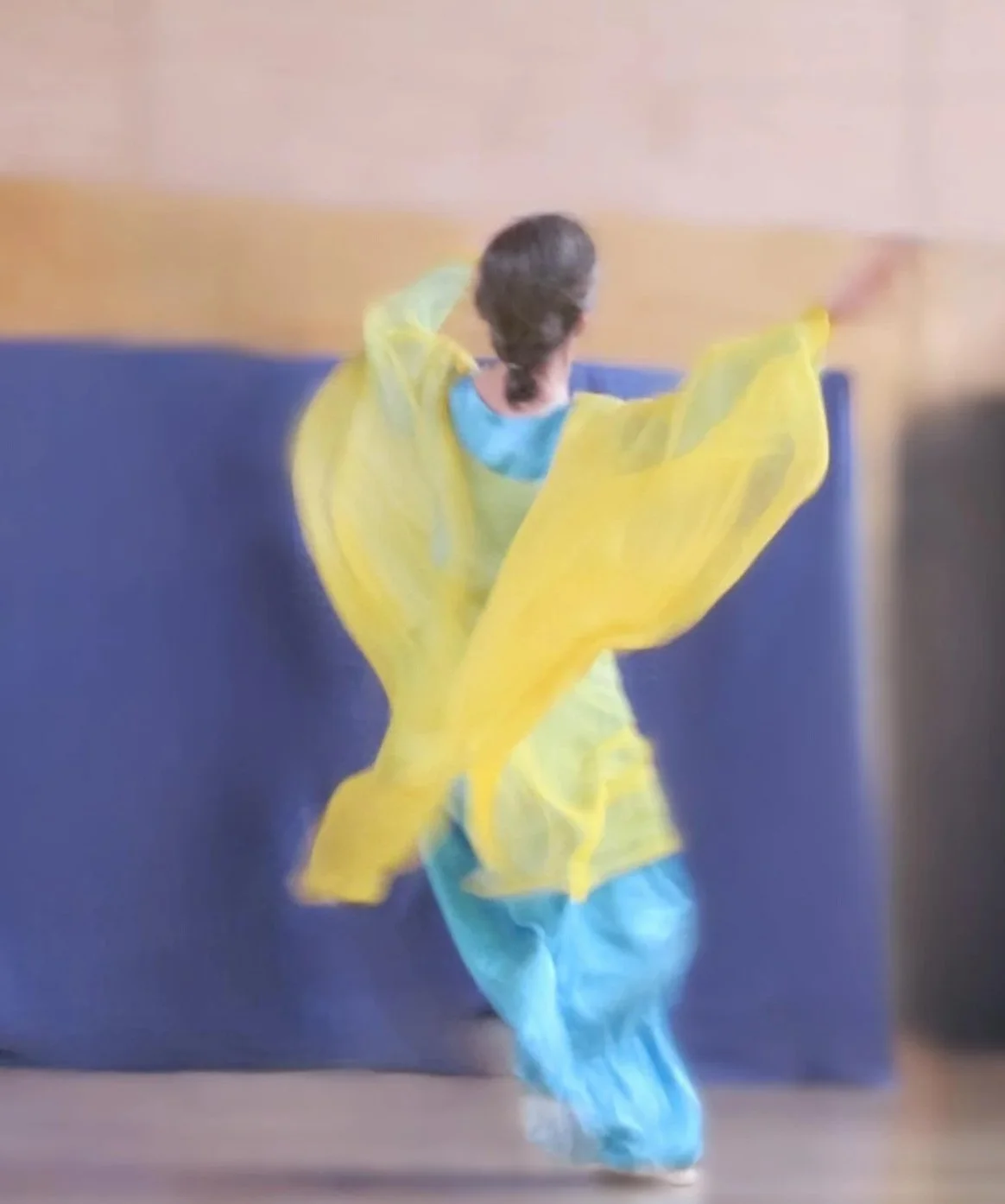
Artistic Eurythmy with its creativity, movement and colour underlies all the other forms of Eurythmy. It is a sensory feast with coloured silk dresses and veils, coloured lights to enhance the mood of a poem or piece of music, poetry spoken or music played live, and Eurythmy gestures moving and transforming the space.
Artistic Eurythmy exists somewhere between pantomine and dance. The Eurythmist lives into the poetry and music creating it truthfully to the best of their ability, trying to incorporate layers of sound gestures, a form, imaginations, colour in the imagination whilst creating the movement, and beat or rhythms.
Pedagogical Eurythmy
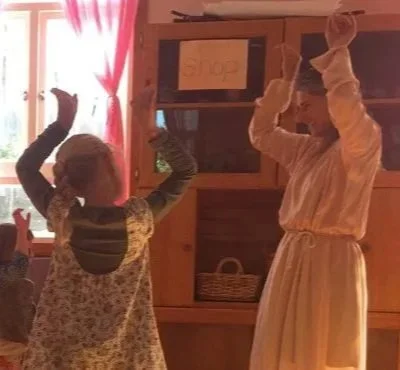
In Steiner Schools all students ideally have eurythmy classes (this is not currently the case in Australia, but with time it could). Eurythmy has its own curriculum complimenting the teaching of other subjects and based on the developmental needs of the children. It begins in the kindergarten and goes through to Yr 12 increasing the child's connection to language, music, their own movement and the movement of others. The students experience using their bodies in a meaningful and sensitive way from the beginning of their education. The work with speech and music helps them acquire presence of mind and an ability to respond to life in an artistic way. The students have the opportunity to heighten their self-awareness, boundaries and influence on others within the group through creating forms together. It is important to note that Eurythmy has very significant capacity to assist with social integration should therefore not be underestimated.
It builds community, fosters social harmony, cooperation, and a sense of belonging by moving together. It also strengthens the vital forces of the child, it deepens learning by embodying and integrating subjects like math, language, and music, and enhances focus.
Eurythmy Therapy
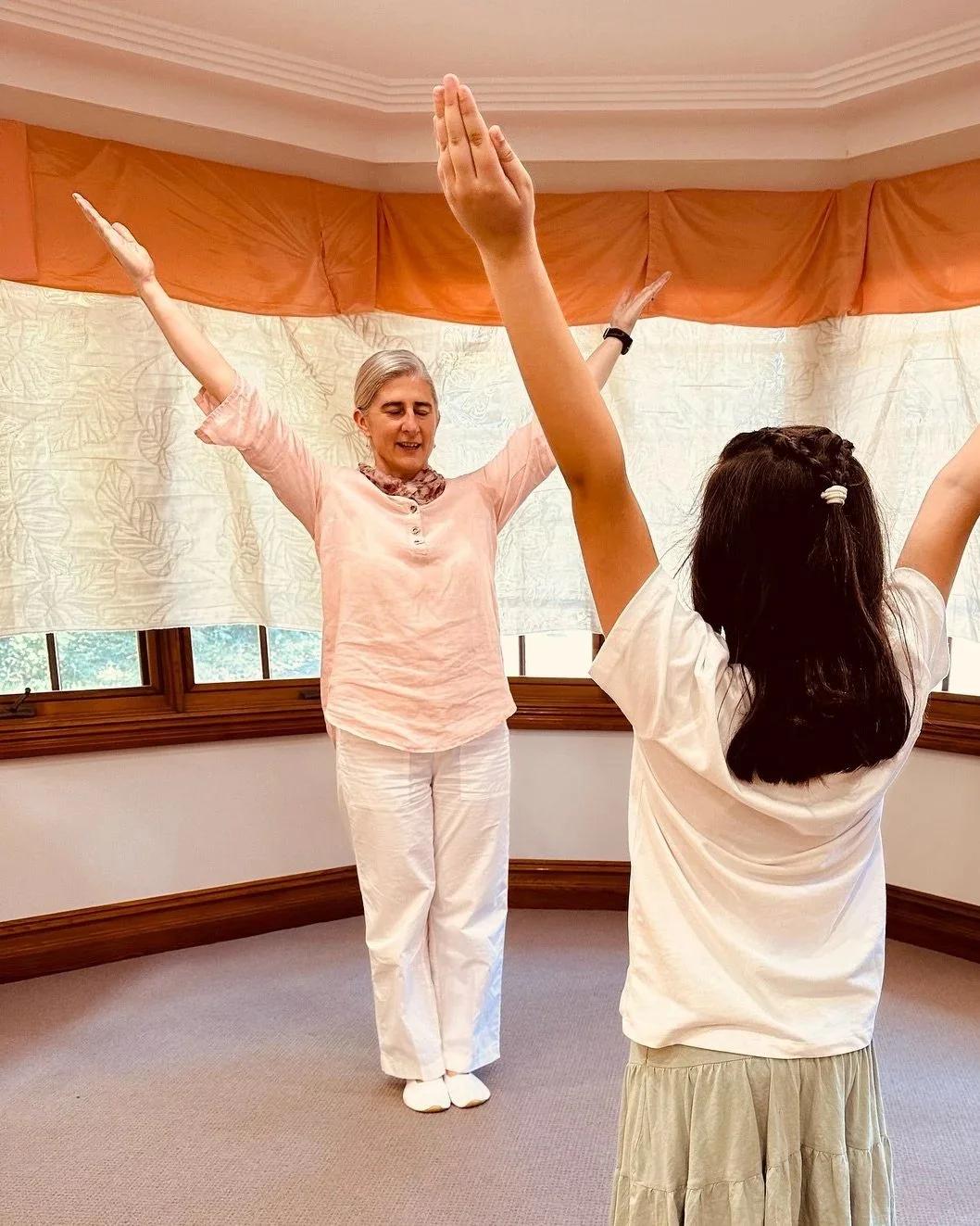
Eurythmy Therapy, especially if used as part of a treatment plan can support self-healing in many acute and chronic conditions such as: insomnia, anxiety, trauma, depression, ADD, ADHD, arthritis, disabilities, menopause, palliative care, asthma, organ disorders, digestive issues, circulatory, nervous system issues.
Eurythmy Therapy comes under the umbrella of Anthroposophical medicine which is conventional medicine extended with an Anthroposophical approach. Foundational is the understanding of the four organ system; lung, hepatobiliary, renal and heart, and their associated elements; earth, water, air and fire. Also understanding the 3-fold and 4-fold aspects of the human being. We all have a nervous system, respiratory and circulatory system and metabolic and limb system. We also have a physical body, etheric (or life body), astral (soul body) and unique spiritual part (a higher ego).
Eurythmy connects language to the starry world. The consonants with the form that they give to a word are connected to the zodiac and the vowels which give the inner space to a word are connected with the planets moving within the zodiacal ring. In witnessing the archetypal consonantal gestures it can be often seen what shaping element they are; S is fiery, L is watery, R is airy, D is earthing. The vowels have a different purpose, they have the connection to the inner life.
The movements in Eurythmy are recognised to have inherent healing forces which are enabled by the focused engagement of the person with irregularities. They improve body awareness, coordination and dexterity, which leads to relaxation or revitalisation and thus to an individual inner balance, guiding patients to the body's own energy resources as the basis for health. The exercises are modified to suit the individual needs and capacities. They can be performed seated, lying down, moving increasing or decreasing speed, jumping- they may even be created by the therapist in the presence of the client. Rhythm exercises and movement meditations may also be used. Importantly the outer movement of the gestures are encouraged to be filled with intention and soul.
Ideally, a doctor and eurythmy therapist cooperate, the diagnosis by the physician is complemented by the movement diagnosis and a treatment plan is developed by the Eurythmy Therapist. Micaela is a unique practitioner in that she has completed the Anthroposophical doctors medical training as well as the Eurythmy Therapy training.