Physiotherapy
Eurythmy Therapy and Physiotherapy both use movement to support health, but they differ profoundly in origin, purpose, methods, and evidence base. Eurythmy Therapy is a movement‑based modality within Anthroposophic Medicine, using gestures derived from speech and music to influence wellbeing, while Physiotherapy is a mainstream, biomedical, evidence‑based profession. Despite this, both can help with pain, mobility, and functional improvement.
Primary Goal:
Eurythmy Therapy:
Harmonise internal processes, support self‑regulation, and strengthen vitality.
Physiotherapy:
Restore physical function, reduce pain, improve mobility and strength.
Similarities:
Movement‑based: Both use movement to support healing.
Holistic orientation: Both consider the whole person, though from different frameworks.
Applicable across ages: Children to older adults.
Used for chronic pain: Evidence shows both can reduce chronic low back pain to a comparable extent.
Therapist‑guided, personalised sessions.
Differences:
Origin & Framework
Eurythmy Therapy:
Rooted in Anthroposophic Medicine and spiritual‑philosophical concepts.
Works with symbolic gestures linked to speech and music.
Physiotherapy:
Rooted in biomedical science, anatomy, physiology, and evidence‑based rehabilitation.
Uses clinical assessment and measurable functional goals.
Methods
Eurythmy Therapy:
Gestures for vowels/consonants, musical tones, rhythm, spatial forms.
Emphasis on inner experience, imagination, and subtle regulation.
Physiotherapy:
Manual therapy, exercise rehab, strength training, mobility work, education.
Uses equipment, clinical tests, and structured rehab programs.
Evidence Base
Eurythmy Therapy:
Growing research especially in Europe
In chronic low back pain, outcomes were comparable to physiotherapy.
Physiotherapy:
Extensive research across many conditions.
Considered a first‑line treatment for musculoskeletal and neurological issues.
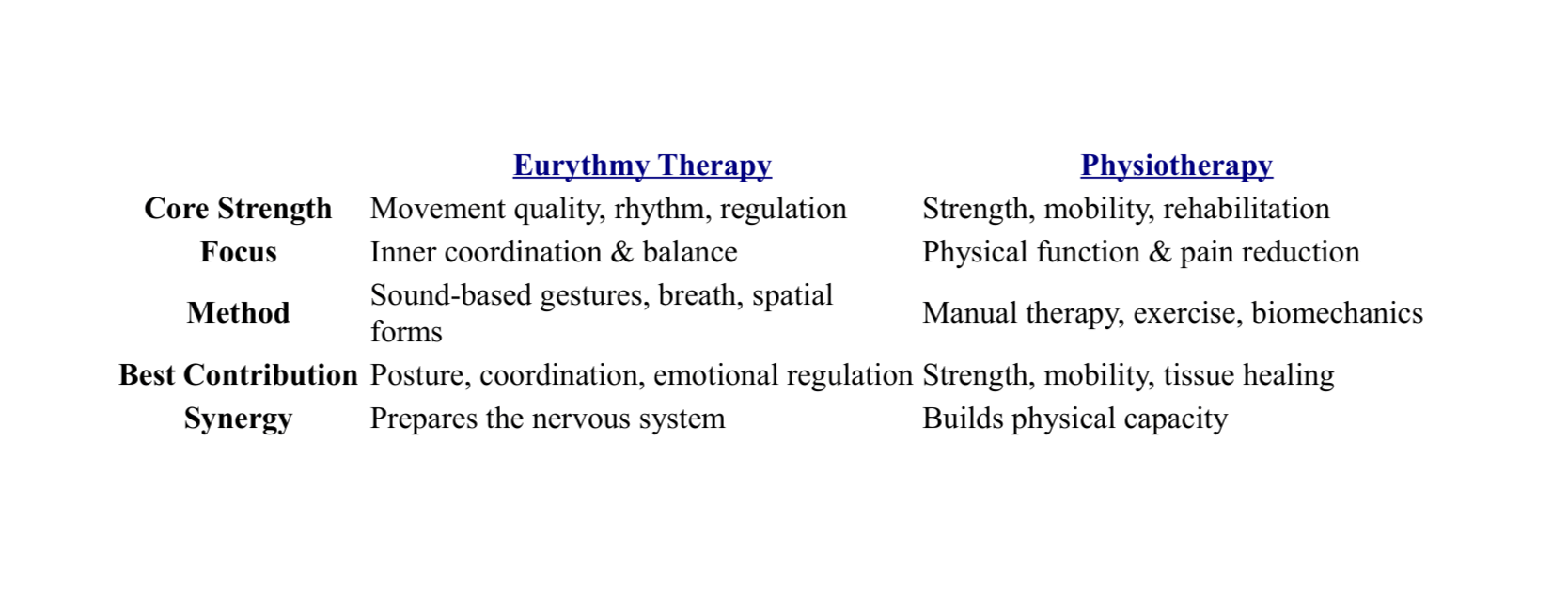
How Eurythmy Therapy & Physiotherapy can work together
Eurythmy Therapy complements Physiotherapy by strengthening the inner rhythmic, postural, and regulatory foundations that physiotherapy then develops into strength, mobility, coordination, and functional rehabilitation. Eurythmy refines movement quality, while physiotherapy builds movement capacity. Together, they create a more complete therapeutic arc.